

Developing functional imaging in the clinical setting

About the Study
Imaging plays a key role in precision cancer medicine and translational cancer research. Cancer diagnosis requires imaging for the detection, characterization, and staging of disease, as well as the planning of biopsies to inform histological confirmation.
Imaging biomarkers complement genomic and molecular diagnostics and provide insights into tumor biology, tumor environment and the changes in response to therapies. They are also of crucial importance in improving treatment planning and monitoring, as well as follow-up.
What we do
We develop and validate quantitative imaging biomarkers in accordance with harmonized cross-center imaging guidelines in order to add value to cancer research.
Advance therapy monitoring in multicenter clinical studies by, for example, identifying imaging-based features of response to therapy including immune checkpoint inhibitors to improve patient diagnosis and treatment outcomes.
Provide services to clinical partners within the CCE BoB trial and beyond, by standardized reporting across all centers on staging and therapy monitoring, as well as the provision of standardized imaging data for collective use within CCE’s data sharing infrastructure.

Meet the Team
Raquel Perez-Lopez
Task Force Leader
Vall d’ Hebron Institute of Oncology (VHIO)
Ines Horvat-Menih
Member
CRUK Cambridge Centre

Mireia Crispin
Member
CRUK Cambridge Centre

Martin John Graves
Member
CRUK Cambridge Centre

Ferdia Gallagher
Member
CRUK Cambridge Centre
Nathalie Lassau
Member
Gustave Roussy
Desirée Deandrei
Member
Gustave Roussy
Arsela Prelaj
Member
Fondazione IRCCS Istituto Nazionale dei Tumori
Marta Vaiani
Member
Fondazione IRCCS Istituto Nazionale dei Tumori

Rimma Axelsson
Member
Karolinska Institutet

Klaus Maier-Hein
Member
DKFZ – NCT Heidelberg

Marco Nolden
Member
DKFZ-NCT Heidelberg
Oliver Sedlaczek
Member
DKFZ-NCT Heidelberg

Philipp Schader
Member
DKFZ-NCT Heidelberg
Adrià Marcos
Member
Vall d’Hebron Institute of Oncology (VHIO)

Christina Zatse
Member
Vall d’Hebron Institute of Oncology (VHIO)
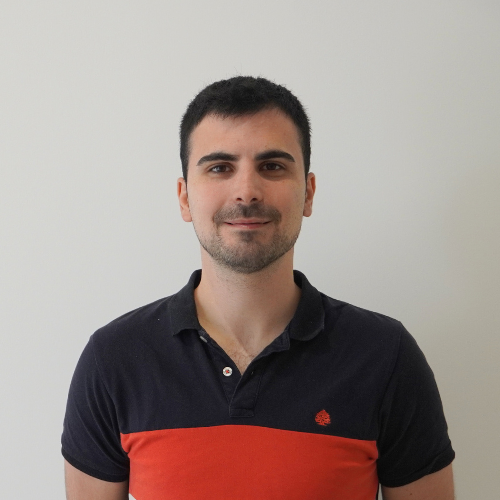
Daniel Navarro
Member
Vall d’Hebron Institute of Oncology (VHIO)
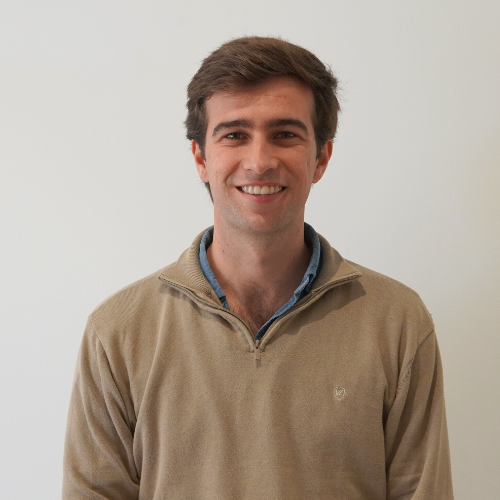
Carlos Macarro
Member
Vall d’Hebron Institute of Oncology (VHIO)

Encouraging and Enabling
Close Collaboration
The Imaging working group enables multicenter trials and supports the translation of new developments into clinical practice in CCE’s member centers.
In the coming years, the Imaging TF plans to launch pilot projects that connect data sources, centres and sites to advance novel research technological pilot projects and personalized medicine pilot projects by combining multiple data types such as multi-omics, imaging, and clinical parameters.
Moreover, the Imaging task force aims to improve the utility of the Virtual Data Center by extending its functionality to facilitate data exchange as well as the sharing of methods and workflows, including their execution. Important examples from a radiological perspective whereby unified processing across CCE through shared methods would be greatly beneficial, include interactive and automatic data annotation and segmentation, radiomics pipelines as well as deep-learning and AI-based image analyses.
The aims of the Imaging task force
The Imaging task force aims to become increasingly involved in expanding joint CCE training and education activities such as organizing training and exchange programs covering specific technical areas (for data stewards, IT experts, cloud technologists, AI imaging researchers, radiologists, medical physicists, and technicians).
To educate on and around the importance of imaging for translational cancer research and encourage research in imaging and molecular ‘omics analyses.
Basket-of-Baskets trial: CT-Radiomics
Sub-study
The CT-Radiomics is a study of predictive and early response radiomics signatures to atezolizumab in molecularly selected populations with advanced solid tumours.

Imaging Standardization
Usually therapy monitoring is based on CT images and RECIST evaluation, although multiparametric functional MRI offers several advantages for the non-invasive characterization of tumor viability.
MEMBERS
7 Renowned European Cancer Centres Collaborate to Advance Cancer Care



CANCER CORE EUROPE (CCE)